
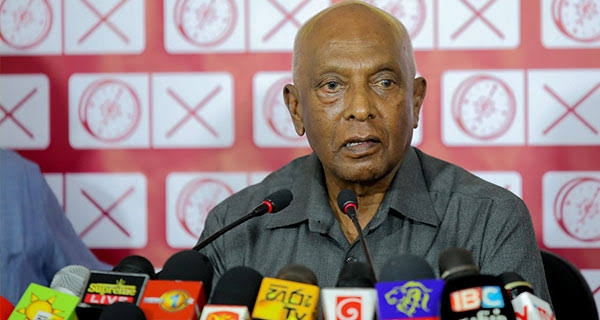

Attorney-at-Law Lal Wijenayake states that the attempt to hurriedly pass the 22nd Constitutional Amendment in Parliament aimed at extending the retirement age of Supreme Court and Court of Appeal judges has created a serious crisis situation within the country.
He stated this in a statement issued on August 28, pointing out that this process violates a fundamental principle protecting judicial independence recognized in democratic countries.
The principle is that service conditions and privileges, including the retirement age of superior court judges, should not be altered while they are in active service. Wijenayake noted that this principle is a major pillar ensuring judicial independence, and every blow dealt to it is a blow to democracy, fundamental rights, and human rights.
Wijenayake pointed out in the statement that judicial independence is not a privilege granted to the people by rulers, but a fundamental right won as a result of long struggles waged through immense sacrifices by progressive forces and the people.
Wijenayake also stated that the judiciary is the primary institution for people to obtain justice in the event that their fundamental and human rights are violated by the executive or the legislature.
He also mentioned that in the event of a conflict between the executive and a citizen, or the legislature and a citizen, the judiciary must have the capacity to independently enforce the law and protect the citizen’s rights. He pointed out that if the judiciary is denied the opportunity to make such an independent intervention, citizens’ freedom and rights will be severely endangered.
Wijenayake stated that justifying the 22nd Amendment as a step taken to expedite trials is unacceptable, and emphasized that influencing judicial independence weakens the institution’s capacity to independently fulfill its primary role.
Furthermore, he stated that describing the protest against the 22nd Amendment merely as a political conflict between the government and political parties is a misguidance of the public. He emphasized through the statement that the question before the people is therefore not about supporting or opposing a political party, but whether the rights won by the people through a long-term struggle can be safely handed over to future generations.