
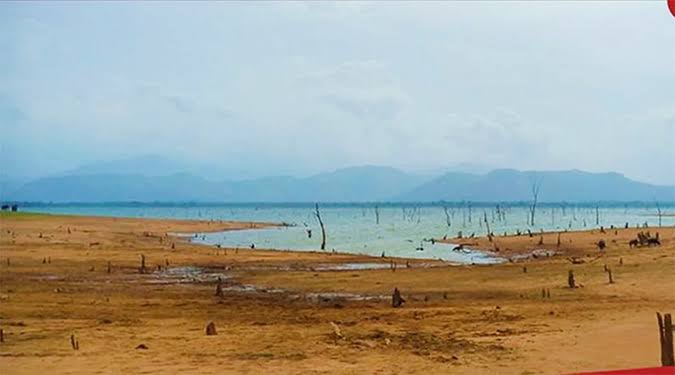

Dry weather conditions have impacted drinking water requirements in seven districts, prompting the National Water Supply and Drainage Board to initiate a groundwater extraction project in the Monaragala and Batticaloa districts as reported to the media.
Under this program, nearly 60 tube wells are currently being constructed in the Monaragala district, according to National Water Supply and Drainage Board Chairman Chandana Bandara.
He further noted that necessary steps have also been taken to construct tube wells for groundwater extraction in the Batticaloa district.
Meanwhile, the Disaster Management Centre stated that drinking water is currently being provided to over 75,000 individuals across seven districts to grant relief to people facing drinking water crises due to the dry weather conditions.
A number of Divisional Secretariat divisions across seven districts, including Badulla, Polonnaruwa, Hambantota, Ratnapura, Batticaloa, and Ampara, have been affected by this dry weather condition, bringing the total number of affected persons to over 84,545.
Along with the dry weather, the water capacity of reservoirs under the Irrigation Department has decreased further, with the overall water capacity dropping to 34.7 percent.
The Ampara district has faced the highest impact regarding the decrease in reservoir water capacity, where the water capacity in the district’s reservoirs has dropped to 21.7 percent. The water capacity in reservoirs of the Batticaloa district has been recorded at 25.6 percent, and Trincomalee district at 26.8 percent.
Meanwhile, the water reserves of several major reservoirs, including Muruthawela, Morawewa, Kaudulla, Athimale, Weerawila, Weheragala, Unnachchiya, Morana, Nagadeepa, and Rotikulam, have now dropped to a level below 20 percent.
In such a situation, the Irrigation Department has stated that steps are being taken to manage and release available water in reservoirs with maximum efficiency, giving priority to drinking water requirements.
Since the pressure on water resources could increase if the dry weather condition persists, attention has been focused on identifying alternative water sources and efficiently managing existing water reserves to maintain uninterrupted drinking water supplies.