
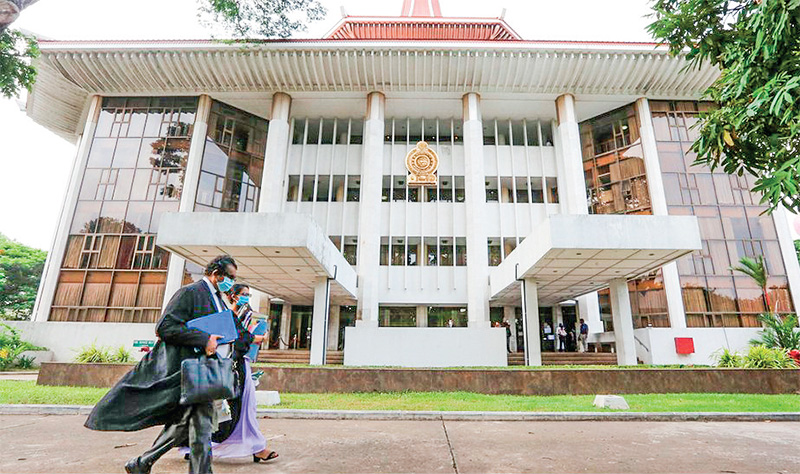

As of August 25, 21 petitions have been filed in the Supreme Court against the proposed 22nd Amendment to the Constitution Bill.
Following the submission of the bill to Parliament on August 18, these petitions have been filed by various parties, including lawyers, political parties, intellectuals, and civil society activists. Reports released on August 25 put the latest count of petitions at 21.
These petitions primarily challenge the bill’s proposals to amend the retirement age of Supreme Court and Court of Appeal judges, and to increase the number of judges in the Court of Appeal.
Section 2 of the bill proposes to raise the retirement age of Supreme Court judges from 65 to 67 years, and the retirement age of Court of Appeal judges from 63 to 65 years. It also proposes to increase the maximum number of Court of Appeal judges to 25.
A core argument of the petitioners is that altering the constitutional safeguards regarding the tenure of judges could impact judicial independence. In particular, the petitions question whether the new retirement age limits will apply to judges currently in active service.
Furthermore, since judicial independence and judicial power form part of the people’s sovereignty, a large number of petitioners have requested the Supreme Court to rule that passing this amendment requires not only a two-thirds majority in Parliament but also approval by the people at a referendum.
Legal organizations including the Bar Association of Sri Lanka (BASL), political parties such as Samagi Jana Balawegaya (SJB) and Sarvajana Balaya, politicians and intellectuals including Professor G.L. Peiris, as well as civil society activists, have joined this legal challenge. On August 24, BASL President President’s Counsel Rajeev Amarasuriya and Secretary Nalin de Silva also filed a separate petition seeking a ruling that the bill should be referred to a referendum.
Opposition Member of Parliament Dayasiri Jayasekara also submitted a petition to the Supreme Court on August 24, pointing out that extending the tenure of currently serving judges under the new retirement age limits could negatively impact judicial independence and popular sovereignty.
Meanwhile, the primary argument presented from the government’s side is that retaining experienced judges in service and increasing the number of Court of Appeal judges are necessary to minimize court delays and the backlog of cases in the judicial system.
Accordingly, the key constitutional question that has now arisen regarding the 22nd Amendment is whether it can be passed solely by a two-thirds majority in Parliament or if public approval must also be secured through a referendum.
Depending on the opinion and determination presented by the Supreme Court, the constitutional path the government must follow to enact the bill will be decided.